080 6801 6801
 080 6801 6901
 Cardiac Sciences
 Bone and Joint
_6a5881022bb72.webp) Gastrointestinal Sciences
Gastrointestinal Sciences Neurosciences
 Renal Sciences
 Maa Kauvery (Women and Child Health)
 Robotic Surgery
 Accident and Emergency Care
 Anaesthesiology
 Arthroplasty (Joint Replacement Surgeries)
 Arthroscopy
 Bariatric Surgery
_6a586b64865e8.webp) Cardiology
Cardiology Cardiothoracic and Vascular Surgery
 Critical Care and ICU
 Dermatology
 Diabetes and Endocrinology
 ENT
ENT_6a5880f0bf74b.webp) Medical Gastroenterology
Medical Gastroenterology General Surgery
 Hand Surgery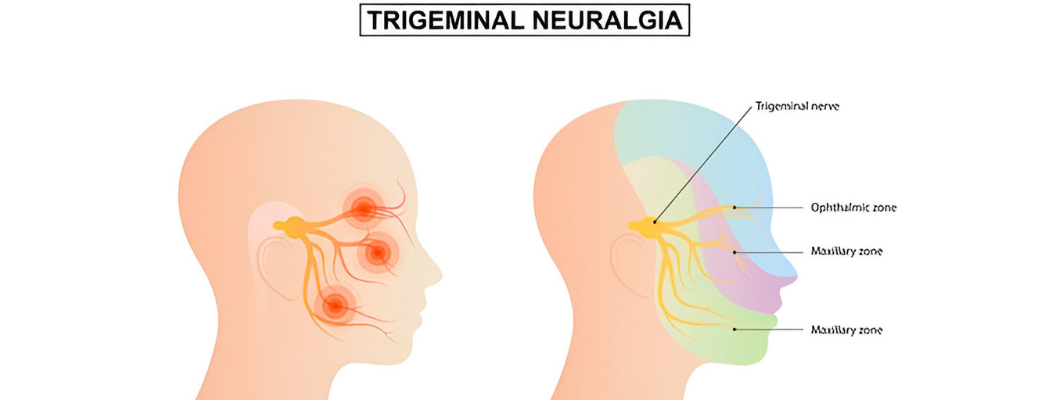
Friday, 27 June, 2025
Imagine having a sudden, electric shock-like discomfort in your face that might be caused by anything such as talking, brushing your teeth, or even a slight wind. Trigeminal Neuralgia is a rare disorder that causes many people to experience this on a daily basis, making it more than merely discomfort.
Trigeminal neuralgia, sometimes known as the "Suicide Disease" because of the excruciating pain it may produce, is one of the most misdiagnosed and misunderstood neurological conditions. Though uncommon, it can change a person's life and is often confused with sinus or dental disorders.
In this blog, we’ll explore what trigeminal neuralgia is, how it feels, its possible causes including brain conditions like aneurysms and AV malformations and what can be done to manage it.
What exactly is Trigeminal Neuralgia?
The primary sensory nerve in your face, the trigeminal nerve, is impacted by Trigeminal Neuralgia (TN), a persistent pain condition. It controls facial, jaw, and eye-related sensations like touch, pain, and warmth.
This causes one side of the face to hurt suddenly and intensely, like an electric shock. Simple actions like chewing, chatting, smiling, or even a gentle breeze might cause it to occur suddenly and linger anywhere from a few seconds to several minutes.
Many people report that the pain is intolerable since it can be so severe. This is the reason the condition has been given the terrifying name "The Suicide Disease."
The Trigeminal Nerve: Your Face’s Sensory Power Line
The trigeminal nerve is the fifth cranial nerve, and it branches out into three major segments:
- Ophthalmic (V1): forehead and eyes
- Maxillary (V2): upper jaw, cheeks, and nose
- Mandibular (V3): lower jaw and mouth
When this nerve becomes irritated or compressed, it misfires, sending exaggerated pain signals to the brain. What should feel like a light touch suddenly becomes a jolt of agony.
What Does Trigeminal Neuralgia Feel Like?
You might have a vague idea, if you've ever had a dental procedure without anesthesia or suffered a sudden jab of intense nerve pain. But this pain is beyond any other. Common signs and symptoms include:
- Sudden, sharp, stabbing pain in the cheek, jaw, teeth, or around the eye
- Pain on only one side of the face
- Attacks triggered by touch, brushing teeth, talking, eating, or wind exposure
- Episodes that last seconds to minutes, but can happen multiple times a day
- A dull ache or burning between attacks (especially in atypical TN)
These attacks can be random or occur in clusters, making life unpredictable and exhausting.
Why Does Trigeminal Neuralgia Happen?
Compression of the trigeminal nerve close to the brainstem is the most common cause. This usually occurs when a blood vessel presses up against the nerve, deteriorating its myelin sheath and leading to malfunction. But there’s much more to it.
The trigeminal nerve may occasionally be compressed by a brain aneurysm, which is a bulging blood vessel in the brain. Sharp facial pain results from the nerve being irritated by this physical pressure.
Because of its size and location, a brain aneurysm may not rupture but still cause problems, particularly if it is close to the cranial nerves.
Now you might be thinking, what is brain aneurysm?
It's a weak spot in the wall of a brain artery that balloons outward, posing the risk of rupture and bleeding.
AV Malformation in the Brain
An arteriovenous malformation (AVM) is a tangle of abnormal blood vessels connecting arteries and veins in the brain. When located near the trigeminal nerve, an AV malformation in the brain can cause compression and chronic pain, similar to TN.
Who is at Risk for Trigeminal Neuralgia?
TN can affect anyone, but some factors increase the risk:
- Most cases occur in people over 50
- Women are more commonly affected
- People with Multiple Sclerosis (MS) are at higher risk
- Those with aneurysms or AVMs in the brain
- Rarely, there may be a genetic component
Note: Not Every Face Pain is Trigeminal Neuralgia
Trigeminal Neuralgia is often misdiagnosed as a dental issue, sinus problem, or jaw joint disorder (TMJ). However, there are key differences:
| Condition | Type of Pain | Location | Trigger |
|---|---|---|---|
| Trigeminal Neuralgia | Sharp, electric-shock | One side of face | Light touch, brushing, wind |
| Toothache | Throbbing, continuous | Teeth/gums | Biting, chewing |
| Sinusitis | Dull, pressure | Forehead, cheeks | Head movement |
| TMJ | Dull ache, clicking | Jaw, ears | Chewing, yawning |
If your facial pain is sudden, electric, and unpredictable — it’s time to consider a best neurologist, not just a dentist.
How Trigeminal Neuralgia is Confirmed?
Doctors typically rely on:
- Medical history & symptom description
- Neurological examination
- MRI scans: These help detect tumors, nerve compression, brain aneurysms, or AV malformations
Sometimes, a special MRI called MR angiography is used to visualize blood vessels and spot aneurysms or vascular loops.
What Actually Helps?
Thankfully, Trigeminal Neuralgia is treatable, though it may take time to find what works best for each patient.
1. Medical Therapy
Many patients experience relief through oral treatments that help calm the nerve’s overactivity. These are typically prescription-based therapies that reduce the intensity and frequency of pain episodes. However, effectiveness varies from person to person, and these medications must be monitored by a specialist due to potential side effects.
2. Surgical Options
When pain is not well controlled with medical treatment, surgical options may be considered. These include:
- Microvascular decompression, which addresses the root cause of a blood vessel, is pressing on the nerve.
- Minimally invasive procedures, such as targeted radiation or nerve intervention techniques, aimed at disrupting pain signals.
3. Specialist-Driven Care for Complex Cases
If the trigeminal neuralgia is linked to conditions like a brain aneurysm or AV malformation, care often involves a multidisciplinary team including neurologists, neurosurgeons, and vascular specialists. Treating the underlying brain issue can significantly reduce nerve pain and improve quality of life.
Living with Trigeminal Neuralgia
Managing TN involves more than just medical treatment. Here are tips for day-to-day coping:
- Avoid known triggers (wind, cold drinks, brushing aggressively)
- Use lukewarm water for face washing
- Eat soft, non-irritating foods
- Practice stress management – anxiety can trigger attacks
Even if you look “normal,” living with TN can be mentally exhausting. Mental health support is crucial.
Conclusion
If you’ve ever felt sharp, electric-like pain on your face triggered by something as simple as a breeze or a smile don’t ignore it.
Trigeminal Neuralgia may be rare, but it is real, debilitating, and most importantly treatable.
Whether it’s a case of nerve compression, a hidden brain aneurysm, or an AV malformation, the right diagnosis and treatment can restore quality of life.