080 6801 6801
 080 6801 6901
 Cardiac Sciences
 Bone and Joint
_6a5881022bb72.webp) Gastrointestinal Sciences
Gastrointestinal Sciences Neurosciences
 Renal Sciences
 Maa Kauvery (Women and Child Health)
 Robotic Surgery
 Accident and Emergency Care
 Anaesthesiology
 Arthroplasty (Joint Replacement Surgeries)
 Arthroscopy
 Bariatric Surgery
_6a586b64865e8.webp) Cardiology
Cardiology Cardiothoracic and Vascular Surgery
 Critical Care and ICU
 Dermatology
 Diabetes and Endocrinology
 ENT
ENT_6a5880f0bf74b.webp) Medical Gastroenterology
Medical Gastroenterology General Surgery
 Hand Surgery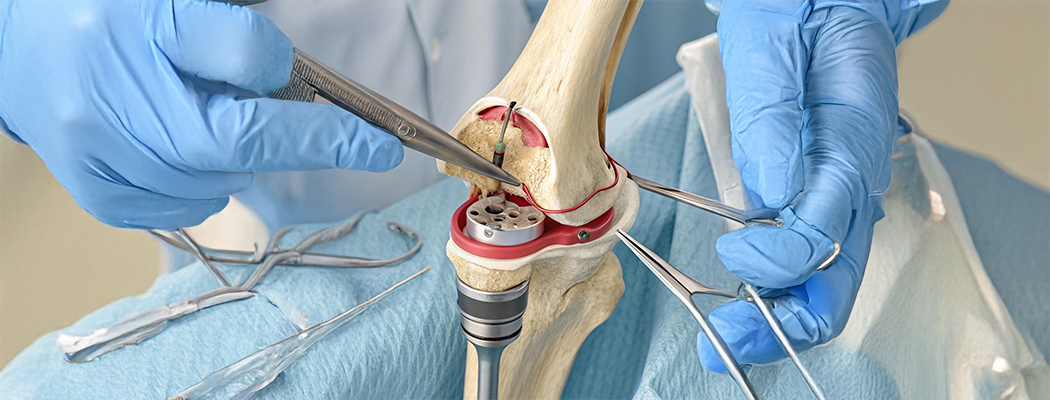
Tuesday, 9 December, 2025
Knee pain sneaks into life in hidden ways. First, you quit taking long walks. Then climbing stairs feels like a daily fight. Soon the joint decides how your day goes, not the other way around. When arthritis reaches that stage, many people start thinking about knee replacement surgery.
Today let's break down what the total knee replacement surgery involves, the choices available today, and what life usually looks like once the joint settles down.
What Is Total Knee Replacement Surgery?
Total knee replacement or TKR surgery removes damaged bone surfaces and replaces them with smooth, durable implants. Arthritis wears away cartilage until the bones scrape each other every time you move. That's where the sharp pain and swelling come from.
During surgery, the orthopedician trims these worn areas, shapes the joint, and fixes the implant pieces in place so the knee bends and straightens without grinding. The idea is simple: steady comfort and dependable movement.
Who Needs a Knee Replacement?
People usually reach this decision after months or years of trying other treatments. Physiotherapy, tablets, braces, injections, they all help for a while. When they stop helping, life starts shrinking.
Here's what many patients describe:
- Pain that wakes them up at night
- A stiff, tight feeling in the morning
- Trouble getting off a chair
- Short walks that feel twice as long
- A knee that feels "tired" even after light household work
Surgeons also look at overall health, activity levels, and X-rays. The age group that often reaches this point sits between 45 and 75, though the real deciding factor is how much the knee affects daily life.
Types of Knee Replacement Procedures
There isn't one single way to replace a knee. The goal stays the same, but the methods vary based on the joint's condition, the surgeon's plan, and how much tissue needs correction.
Conventional (Open) Knee Replacement
This approach has been around the longest. It uses a wider incision, which gives the surgeon a clear view of the joint from every angle. For knees with severe arthritis, deformity, or previous surgeries, this method offers more control.
Reasons many surgeons still rely on it:
- Trusted long-term results
- Better access in complex cases
- Works well for severe joint damage
The recovery pace is a bit slower because the soft tissues experience more handling, but the final outcome stays strong.
Minimally Invasive Surgery
This approach works through a smaller incision while protecting surrounding tissues. The implant is the same, the pathway to the joint changes.
People often like this option because:
- Pain during early recovery tends to be lower
- Hospital stay can be shorter
- Daily routines return quicker
Not everyone qualifies. Bone shape, joint alignment, or older surgical scars can sometimes make the open approach safer.
Read More: Robotic Joint Replacement Surgery in Bangalore
Robotic-Assisted Knee Replacement
Robotic systems bring another layer of precision to the table. Before surgery, the system creates a detailed map of your knee. During the operation, sensors guide the surgeon's movements so the implant sits in the most natural position.
What many patients notice afterward:
- Smoother bending
- More balanced feel when walking
- Less soft-tissue irritation
- Early recovery feels easier
The surgeon stays fully in charge. The robotic arm simply keeps the plan on track.
Benefits and Risks of Knee Replacement
Benefits
Most people choose surgery for one reason: they want their life back. And in many cases, that's exactly what happens.
Common improvements:
- Sharp pain fades
- Walking feels more stable
- Sitting and standing require less effort
- Confidence returns, especially outdoors
- Long outings no longer feel impossible
Pain relief doesn't arrive overnight, but it builds steadily.
Risks
Every surgery has risks. Knee replacement is no exception.
Possible issues include:
- Infection
- Blood clots
- Stiffness
- Implant loosening years later
- Rare injury to nearby structures
Hospitals follow strict protocols to lower these risks. Early movement and physiotherapy also help you regain control quickly.
Recovery and Rehabilitation Process
Recovery stays just as important as the surgery itself. Physiotherapy does most of the heavy lifting once you're home.
Right after surgery
Most patients stand or walk with help on the same day or the next morning. Simple movements, lifting the leg, bending a little, taking supported steps, start early.
The first few weeks
Swelling comes and goes. Strength improves. Physiotherapists focus on bending and straightening the joint. Walking aids stay around until balance returns. Many people handle light household work after three or four weeks.
The months that follow
From month three onward, progress becomes steady and noticeable. Stairs get easier. Walks get longer. Sleep improves. By the one-year mark, most patients feel the new knee as a natural part of daily life.
Life After Knee Replacement Surgery
Most people return to walking, swimming, cycling, and travel without worrying about sudden pain. High-impact sports stay off-limits, though lighter activities help keep the joint strong.
A well-aligned knee replacement often lasts many years. Staying active and keeping leg muscles strong go a long way toward protecting the implant.
Patient Story
"I spent almost five years avoiding stairs. After my robotic knee replacement, the difference surprised me. Within a few months, I walked my old morning route again. I didn't rush things, but each week felt better than the last."
— R, 64 years old
FAQs on Knee Replacement Surgery
1. What is the success rate of total knee replacement surgery?
Generally success rates are considered to be 85-95%. Most implants last beyond 15 years, often longer when the joint stays active and muscles stay strong.
2. How long does recovery take?
Daily routines return in four to six weeks for most people. Full strength settles in over several months.
3. Is robotic knee replacement better than traditional surgery?
Robotic assistance delivers high accuracy and a smoother early recovery in many cases. Traditional and minimally invasive approaches still offer excellent outcomes when used appropriately.
4. Can both knees be replaced at once?
Some patients undergo a single-sitting bilateral replacement when their health supports the longer procedure and rehab demands. Surgeons weigh this decision carefully.
5. What are the risks of delaying knee replacement?
Waiting too long often leads to more stiffness, weaker muscles, and worsening deformity. These factors make recovery slower.