080 6801 6801
 080 6801 6901
 Cardiac Sciences
 Bone and Joint
_6a5881022bb72.webp) Gastrointestinal Sciences
Gastrointestinal Sciences Neurosciences
 Renal Sciences
 Maa Kauvery (Women and Child Health)
 Robotic Surgery
 Accident and Emergency Care
 Anaesthesiology
 Arthroplasty (Joint Replacement Surgeries)
 Arthroscopy
 Bariatric Surgery
_6a586b64865e8.webp) Cardiology
Cardiology Cardiothoracic and Vascular Surgery
 Critical Care and ICU
 Dermatology
 Diabetes and Endocrinology
 ENT
ENT_6a5880f0bf74b.webp) Medical Gastroenterology
Medical Gastroenterology General Surgery
 Hand Surgery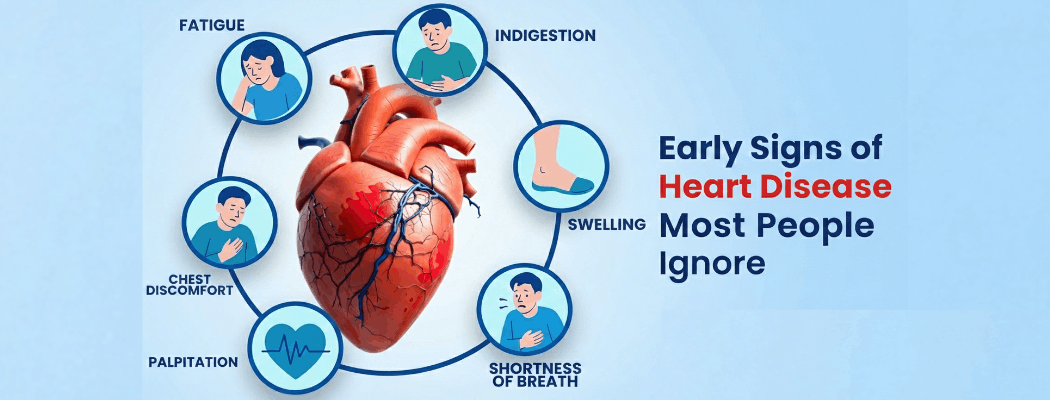
Wednesday, 18 February, 2026
Early signs of heart disease rarely show up the way people expect. There’s no warning bell. No dramatic moments. No clear sign telling you to stop and pay attention. Instead, something feels off. You feel more tired than usual. Breathing feels heavier. A strange discomfort appears and disappears. Life moves on, so the feeling gets pushed aside.
That’s how heart disease slips in quietly. For people with diabetes, high blood pressure, excess weight, or a family history of heart problems, these early changes aren’t random. They’re often the first cracks. Most people don’t see them until much later.
What Heart Disease Actually Is
Heart disease isn’t one illness. It’s a long process. Most of the time, it starts with blood vessels slowly narrowing. Fatty material builds up inside the arteries. Blood struggles to move freely. The heart compensates by working harder. This doesn’t feel dramatic. It feels normal. That’s the danger. The heart adjusts silently until one day it can’t keep up anymore.
Why Early Signs Get Ignored So Easily
People ignore early symptoms because they don’t interrupt life right away.
- You still go to work.
- You still handle responsibilities.
- Nothing feels urgent.
So explanations come easily:
- “I’m tired because life is stressful”
- “I’ve gained weight”
- “I’m out of shape”
- “It’s probably acidity”
There’s also fear. Admitting something might be wrong with your heart forces decisions people don’t want to make. Tests. Lifestyle changes. Reality. So the signs get minimized. The heart keeps working under pressure.
Early Signs of Heart Disease People Talk Themselves Out Of
These symptoms don’t always show up together. Most people notice one at a time. That’s why they get dismissed.
Fatigue That Feels Different
Everyone gets tired. That’s not the concern. The problem starts when rest stops helping. People wake up already drained. Normal tasks feel heavier. Energy fades earlier in the day than it used to. Motivation drops without explanation. Many people live like this for months, telling themselves it’s normal. Later, they realize it was the first sign something wasn’t right.
Breathlessness That Creeps In Slowly
Shortness of breath doesn’t usually arrive all at once. It sneaks in. Stairs feel harder. Walking requires pauses. Some people avoid activity without realizing why. Others notice breathing feels uncomfortable when lying flat. Because the change happens gradually, it feels easy to excuse. That delay matters.
Chest Discomfort That Doesn’t Hurt
Heart-related chest symptoms don’t always feel painful. Pressure. Tightness. A strange heaviness. Something that comes and goes. When pain isn’t sharp, people dismiss it. They blame gas, stress, muscle strain. The body keeps sending signals anyway. Ignoring these sensations is common. It’s also risky.
A Heartbeat That Feels “Off”
Fluttering. Racing. Skipping beats. People notice these sensations and wait for them to stop. When they do, relief sets in. Then it happens again days later. Irregular rhythm affects how well blood circulates. Repeated episodes deserve attention, even when they don’t last long.
Dizziness or Lightheaded Moments
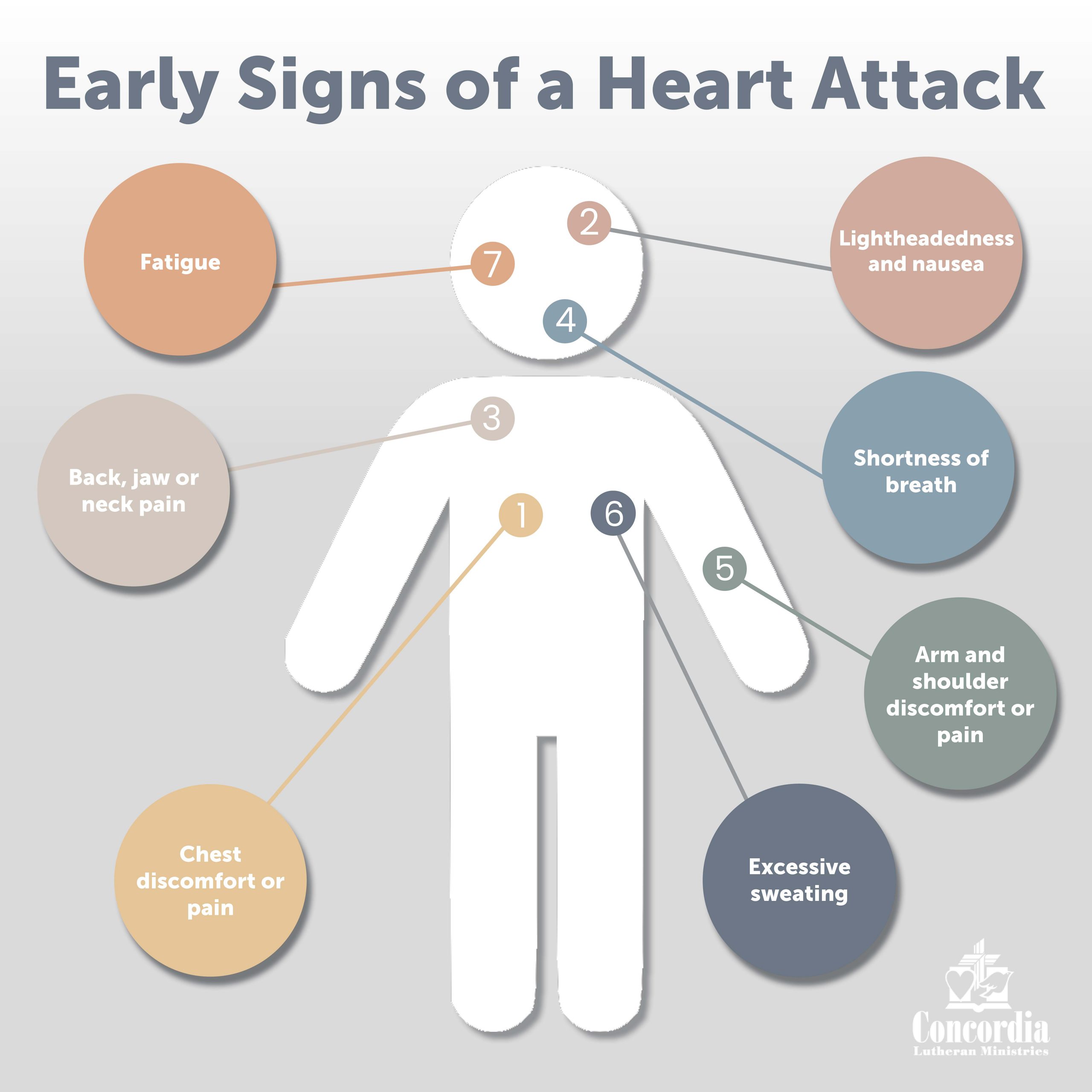
Feeling faint isn’t normal. Standing up and feeling unsteady. A brief blackout. A foggy sensation that comes without warning. These moments often reflect unstable blood flow to the brain. They tend to get brushed off until something worse happens.
Swelling in the Feet or Ankles
This one surprises people. Shoes feel tighter. Ankles look puffy by evening. Socks leave deep marks. Swelling doesn’t seem related to the heart, so it gets ignored. In reality, it often signals circulation struggling to keep up.
Nausea or Stomach Discomfort That Doesn’t Add Up
Heart issues sometimes feel digestive. Nausea. Bloating. A strange upper-stomach discomfort. Many people chase antacids for months. This happens more often in women and people with diabetes, which makes it easier to misread.
Pain That Shows Up Somewhere Else
Heart pain doesn’t stay put. Jaw tightness. Neck discomfort. Upper back ache. Pain in the left arm. The sensation usually feels dull, not sharp. That’s why it gets ignored.
Images Related to Early Heart Disease Signs
Early Signs of Heart Disease in Men
Men often notice symptoms during physical effort. Chest pressure during activity stands out. So does breathlessness that wasn’t there before. Some notice unexplained sweating or pain spreading into the arm or shoulder. Because these signs don’t stop daily life immediately, many men delay getting checked.
Early Signs of Heart Disease in Women
Heart disease looks different in women more often than people realize. Chest pain isn’t always present. Instead, women report long-lasting fatigue, sleep problems, nausea, breathlessness, or pain in the jaw and back. These symptoms overlap with stress and hormonal changes, so they get dismissed. That delay costs time.

Risk Factors That Make These Signs Matter More
- Diabetes
- High blood pressure
- High cholesterol
- Excess body weight
- Smoking
- Low physical activity
- Long-term stress
- Family history of heart disease
The more factors involved, the less room there is for ignoring symptoms.
When to See a Cardiologist
Waiting for symptoms to become severe is a mistake many people regret. A consult with a cardiologist makes sense when:
- Fatigue doesn’t improve
- Breathlessness appears during simple tasks
- Chest discomfort repeats
- Palpitations keep returning
- Swelling becomes noticeable
- Multiple symptoms appear together
People with known risk factors benefit from routine visits, even when they feel “okay.”
How Heart Disease Gets Found Early
Early detection usually starts with a heart health check-up. Doctors look at patterns, not single symptoms. Tests help reveal what the body has been compensating for quietly. Common cardiac diagnostic tests include blood work, ECG, imaging studies, and stress testing. These tools show how the heart handles pressure before emergencies occur.
Practical Ways to Reduce Risk
Prevention isn’t about perfection. It’s about consistency. Helpful steps include:
- Keeping blood sugar controlled
- Managing blood pressure
- Eating regular, balanced meals
- Cutting back on heavily processed foods
- Moving the body most days
- Avoiding tobacco
- Sleeping properly
- Managing long-term stress
Small changes matter more than sudden overhauls.
Conclusion
Heart disease doesn’t usually arrive with drama. It arrives quietly. The body sends signals early. Fatigue. Breathlessness. Discomfort that feels easy to dismiss. Ignoring them feels harmless at first. It rarely stays that way. Paying attention early protects the heart and prevents outcomes people wish they had avoided.
FAQs
What are the earliest signs of heart disease?
Fatigue, breathlessness, chest discomfort, palpitations, and swelling often appear first.
Can heart disease have no symptoms?
Yes. Some people notice very little until the condition advances.
Do symptoms differ between men and women?
Yes. Women often experience fatigue, nausea, and jaw or back pain instead of chest pain.
At what age do symptoms start?
Symptoms appear earlier in people with diabetes, hypertension, obesity, or family history.
Is constant fatigue linked to heart disease?
Yes. Ongoing fatigue often reflects reduced heart efficiency.
When should I see a cardiologist?
When symptoms repeat, persist, or appear together, especially with known risk factors.