080 6801 6801
 080 6801 6901
 Cardiac Sciences
 Bone and Joint
_6a5881022bb72.webp) Gastrointestinal Sciences
Gastrointestinal Sciences Neurosciences
 Renal Sciences
 Maa Kauvery (Women and Child Health)
 Robotic Surgery
 Accident and Emergency Care
 Anaesthesiology
 Arthroplasty (Joint Replacement Surgeries)
 Arthroscopy
 Bariatric Surgery
_6a586b64865e8.webp) Cardiology
Cardiology Cardiothoracic and Vascular Surgery
 Critical Care and ICU
 Dermatology
 Diabetes and Endocrinology
 ENT
ENT_6a5880f0bf74b.webp) Medical Gastroenterology
Medical Gastroenterology General Surgery
 Hand Surgery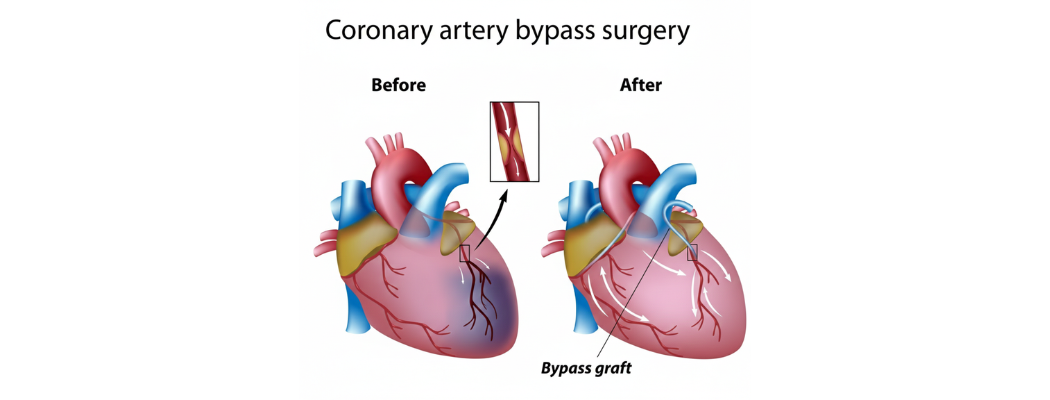
Sunday, 16 March, 2025
A heart attack never arrives on schedule. For patients and families, the hours after diagnosis often feel rushed, confusing, and frightening. One question comes up again and again, does this situation need emergency cardiac surgery, or can treatment wait?
CABG for heart attack patients sits right at the intersection of urgency and planning. Some people stabilize with medicines or stents. Others deteriorate quickly and need the operating room without delay. Knowing the difference matters because timing often shapes survival, recovery, and long-term heart function.
This guide explains when bypass surgery becomes urgent, how emergency CABG differs from a planned procedure, and why doctors sometimes choose surgery over stents during a heart attack.
What Happens to the Heart During a Heart Attack?
A heart attack begins when blood flow through a coronary artery drops sharply or stops. Most often, this happens because a cholesterol plaque ruptures and forms a clot. Without oxygen-rich blood, heart muscle starts to suffer within minutes.
Damage does not occur evenly. Some areas weaken while others struggle to compensate. Blood pressure may fall. Heart rhythm can turn erratic. In severe cases, the heart fails to pump enough blood to support the body.
At this stage, treatment focuses on restoring blood flow as fast as possible and stabilizing the patient. Medications, oxygen, and catheter-based procedures often come first. Surgery enters the picture when these measures fall short or appear unsuitable.
Can Heart Attack Patients Need Bypass Surgery?
Yes, and more often than many expect. Heart attack treatment does not follow a single script. While angioplasty and stenting remain common first-line options, CABG after myocardial infarction becomes necessary in specific settings. The heart attack itself does not automatically mean surgery. The underlying pattern of artery disease does.
Patients with widespread blockages, unstable circulation, or failed catheter procedures often benefit more from bypass surgery. In these cases, CABG for heart attack patients offers a more complete and durable way to restore blood flow.
Situations Where CABG Is Urgently Required
Emergency bypass surgery is reserved for situations where delay places the patient at serious risk. These scenarios tend to evolve quickly and leave little room for observation.
Multiple Blocked Coronary Arteries
When several major arteries show severe narrowing, placing one or two stents may not restore enough blood flow. Surgeons often recommend CABG to bypass all critical blockages in one operation, especially if heart function already appears compromised.
Failed or Unsuitable Angioplasty
Angioplasty does not always succeed. Sometimes the artery collapses, re-blocks, or proves too complex to treat with stents. In these moments, emergency cardiac surgery becomes the safest remaining option.
Ongoing Chest Pain Despite Treatment
Persistent chest pain after medications and catheter intervention suggests ongoing ischemia. Continued lack of blood supply increases muscle damage. Emergency bypass surgery aims to halt that progression.
Left Main Artery Blockage
The left main coronary artery supplies a large portion of the heart. Significant blockage here places patients at high risk of sudden deterioration. Surgery usually offers better survival than stenting in this setting.
Cardiogenic Shock or Unstable Condition
When blood pressure drops and organs stop receiving enough blood, time becomes critical. CABG in cardiogenic shock carries risk, yet delaying intervention often proves worse. Surgeons proceed because restoring blood flow offers the best chance for recovery.
Emergency CABG vs Planned CABG
Planned CABG allows time for preparation. Patients stabilize, undergo detailed testing, and enter surgery under controlled conditions.
Emergency CABG feels different. Decisions happen quickly. Preoperative optimization remains limited. Surgeons often operate while the heart still struggles from the recent attack.
Because of these differences, emergency bypass surgery carries higher short-term risk. Despite that, many patients recover well, especially when surgery prevents further heart damage.
CABG vs Stent During a Heart Attack
Stents work well for single, straightforward blockages. They restore blood flow fast and avoid open surgery.
CABG for heart attack patients becomes preferable when disease extends across multiple arteries, involves complex anatomy, or affects the left main vessel. Surgery also reduces the need for repeat procedures in people with diabetes or diffuse disease.
Choosing between CABG and stents often depends on real-time imaging, patient stability, and surgical availability. Heart teams weigh these factors together rather than following rigid rules.
Risks of Delaying Bypass Surgery
Waiting too long carries its own dangers. Ongoing ischemia leads to irreversible muscle damage. Heart failure risk rises. Dangerous rhythm disturbances appear more often.
In some patients, delay allows inflammation to worsen, making later surgery harder. Doctors sometimes face a narrow window where surgery offers maximum benefit with acceptable risk.
Recovery After Emergency CABG
Recovery varies widely. Some patients wake up stronger within days. Others require longer intensive care, especially after cardiogenic shock.
Most patients spend a week or more in the hospital. Fatigue lingers for weeks. Cardiac rehabilitation plays a central role in rebuilding strength and confidence.
Families often notice emotional changes too. Anxiety and low mood appear common after sudden cardiac events. Support and follow-up care matter as much as surgical success.
When to Seek Immediate Cardiac Care
Chest pressure, breathlessness, unexplained sweating, nausea, or pain spreading to the arm or jaw require urgent evaluation. Do not wait for symptoms to pass. Early treatment keeps options open and improves outcomes.
If doctors recommend emergency bypass surgery, asking to consult a cardiac surgeon quickly helps clarify risks and benefits. Decisions feel overwhelming, yet acting promptly saves heart muscle and lives.
Key Takeaway: Timing Saves Lives
CABG for heart attack patients does not always mean rushing to surgery. Many stabilize with less invasive care. Others face situations where emergency bypass surgery offers the best chance of survival.
The difference lies in artery anatomy, heart stability, and response to initial treatment. Recognizing urgency, trusting the heart team, and moving without delay often make all the difference.
Early care, informed decisions, and timely intervention remain the strongest tools against heart attack damage.
FAQ
Can bypass surgery be done immediately after a heart attack?
Yes. In certain situations, bypass surgery is performed within hours of a heart attack. This usually happens when blood flow cannot be restored with medicines or angioplasty, or when the patient becomes unstable.
Is emergency CABG risky?
Emergency CABG carries more risk than a planned procedure. Patients often arrive in weaker condition, sometimes with low blood pressure or rhythm problems. Even so, delaying surgery in these cases often poses a greater danger.
Why do some heart attack patients need CABG instead of stents?
Stents work well for single or simple blockages. CABG becomes the preferred option when multiple arteries are severely blocked, when the left main coronary artery is involved, or when angioplasty fails.
How soon should CABG be done after a heart attack?
Timing depends on the patient’s condition. Some require surgery immediately, especially if they remain unstable or develop cardiogenic shock. Others improve with initial treatment and undergo CABG days later, once inflammation settles.