080 6801 6801
 080 6801 6901
 Cardiac Sciences
 Bone and Joint
_6a5881022bb72.webp) Gastrointestinal Sciences
Gastrointestinal Sciences Neurosciences
 Renal Sciences
 Maa Kauvery (Women and Child Health)
 Robotic Surgery
 Accident and Emergency Care
 Anaesthesiology
 Arthroplasty (Joint Replacement Surgeries)
 Arthroscopy
 Bariatric Surgery
_6a586b64865e8.webp) Cardiology
Cardiology Cardiothoracic and Vascular Surgery
 Critical Care and ICU
 Dermatology
 Diabetes and Endocrinology
 ENT
ENT_6a5880f0bf74b.webp) Medical Gastroenterology
Medical Gastroenterology General Surgery
 Hand Surgery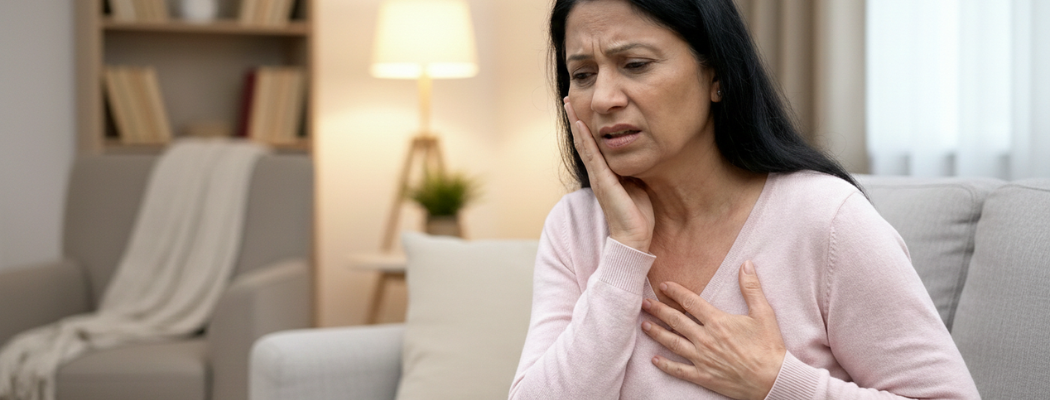
Sunday, 16 March, 2025
Heart disease rarely announces itself clearly in women. The popular image of a sudden collapse or crushing chest pain doesn’t match what many women experience. Instead, symptoms arrive quietly, stretch over weeks or months, and often feel disconnected from the heart.
Many women begin searching for women heart attack symptoms only after something feels off for a while. For those living with PCOS, diabetes, thyroid conditions, or navigating menopause, the confusion grows. Fatigue feels hormonal. Breathlessness feels like weight gain. Poor sleep feels normal. The early signs of heart disease in women slip into daily life and stay there unnoticed.
Doctors hear this story often, usually after damage has already started.
Why Heart Disease Symptoms Are Different in Women
Part of the explanation sits in biology. Women tend to develop heart disease in smaller blood vessels rather than the large arteries more commonly affected in men. This pattern doesn’t always show up on standard tests. Hormonal shifts, especially after menopause, change how blood vessels behave and how inflammation builds.
But biology doesn’t tell the full story.
Women are also more likely to normalise discomfort. They keep working through exhaustion. They delay appointments. When symptoms sound vague, healthcare systems sometimes do the same.
The result is a gap, not in pain tolerance, but in recognition.
Early Heart Disease Signs Women Commonly Experience
These symptoms often appear gradually. Many women recall them only in hindsight.
Unusual fatigue and weakness
This isn’t the end-of-day tiredness most people feel. Women describe waking up exhausted, struggling with simple routines, or feeling drained after tasks that once felt easy. Rest doesn’t help much. In clinical terms, this fatigue often links to reduced blood supply and early heart strain.
Shortness of breath without exertion
Feeling breathless while talking, lying down, or doing light household work raises red flags. Some women mention waking suddenly at night, needing to sit up to breathe comfortably. This symptom shows up frequently in women with diabetes or long-standing thyroid imbalance.
Nausea, vomiting, or indigestion
Heart disease symptoms in women often masquerade as stomach trouble. Persistent acidity, bloating, or nausea that doesn’t respond to usual remedies deserves attention. Many women self-treat these signs for weeks before realising something else may be wrong.
Jaw, neck, shoulder, or upper back pain
Pain doesn’t always centre on the chest. A dull ache in the jaw, stiffness in the upper back, or shoulder discomfort that appears without injury often gets dismissed. Yet these pain patterns appear repeatedly in women later diagnosed with heart disease.
Sleep disturbances
Difficulty falling asleep, frequent waking, or feeling unrested despite adequate sleep sometimes shows up months before a cardiac event. Women often notice sleep quality worsening without clear explanation.
Anxiety or sudden uneasiness
Some women report a persistent sense of unease or restlessness. Others describe a vague feeling that something isn’t right. This isn’t everyday stress. Clinicians increasingly recognise this symptom as part of early heart disease in women.
Lightheadedness or dizziness
Feeling faint while standing, walking, or even sitting quietly may signal reduced blood flow. When episodes repeat, they deserve investigation.
How Heart Disease Symptoms in Men Are Different
Men’s symptoms tend to follow a clearer pattern, which speeds up diagnosis.
Classic chest pain or pressure
Men often report heavy, squeezing chest pain that builds quickly. The intensity usually prompts immediate medical attention.
Left arm pain
Pain radiating down the left arm remains a well-known sign and continues to play a key role in early detection.
Sudden sweating
Cold sweats without physical effort often accompany male cardiac events and raise alarm quickly.
Women vs Men: Heart Disease Symptoms Comparison
| Pattern | Women | Men |
|---|---|---|
| Chest pain | Mild, delayed, or absent | Early and intense |
| Fatigue | Common early sign | Less frequent early |
| Digestive symptoms | Common | Uncommon |
| Pain location | Jaw, back, neck | Chest, left arm |
| Anxiety | Frequently reported | Less common |
This contrast explains why heart disease signs women ignore often fail to trigger urgency, both personally and medically.
Risk Factors That Increase Heart Disease in Women
Certain conditions push cardiovascular risk higher and earlier.
PCOS brings insulin resistance and inflammation. Diabetes raises heart disease risk more sharply in women than in men. Thyroid disorders affect heart rhythm and cholesterol levels. Menopause changes how blood vessels respond and how fat distributes.
Add chronic stress, poor sleep, and caregiving burdens, and the strain compounds quietly.
When Should Women See a Cardiologist?
Waiting for chest pain often means waiting too long.
Women should consider a cardiology review when symptoms linger beyond a couple of weeks, worsen over time, or appear together. Fatigue paired with breathlessness. Sleep problems combined with dizziness. Digestive discomfort alongside back or jaw pain.
Family history matters. So does instinct. Many women say they sensed something was wrong long before tests confirmed it.
Why Ignoring Early Signs Can Be Dangerous
Heart disease doesn’t start with a crisis. It builds slowly. Small vessel damage, inflammation, and reduced oxygen supply weaken the heart over time.
When women present late, recovery becomes harder. Outcomes tend to be poorer, not because disease is different, but because recognition arrived late.
Early attention changes that trajectory.
Key Takeaway: Listen to Your Body Early
Early heart disease signs in women often feel ordinary. That ordinariness hides risk.
If symptoms feel new, persistent, or out of character for your body, they deserve attention. Heart disease symptoms vs men differ in form, not seriousness.
Listening early protects more than the heart. It protects time, recovery, and quality of life.
FAQs
What are the earliest signs of heart disease in women?
Fatigue, breathlessness at rest, disturbed sleep, digestive discomfort, and unexplained jaw or back pain often appear first.
Do women experience chest pain during heart problems?
Some do. Many don’t. Chest pain may appear late or stay mild.
Why are heart disease symptoms missed in women?
Symptoms overlap with hormonal changes, stress, and common health issues, and diagnostic bias still exists.
Are heart attack symptoms milder in women?
They are different, not milder, and often less obvious.
When should a woman consult a cardiologist?
When symptoms persist, repeat, or interfere with daily life, especially with existing risk factors.